Drywall for Cambridge's Old Houses and New Ones
Converting lath and plaster to drywall in Galt and Preston without wrecking the trim, replacing water-damaged walls and ceilings in the low streets by the Grand and Speed, repairing ceilings, and boarding basements and additions across Hespeler and the newer subdivisions.
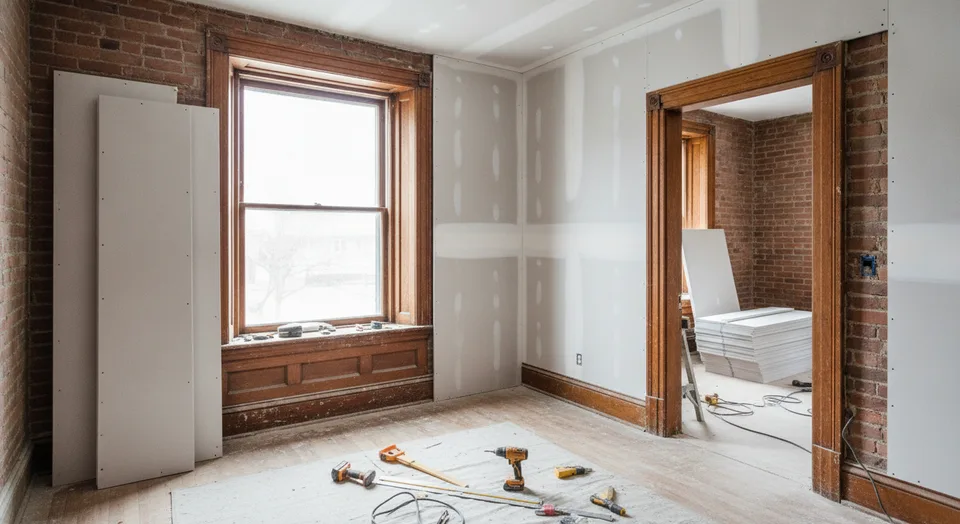
Cambridge was three towns before it was one city, and the drywall work still sorts itself by which one you are in. Galt and Preston have the largest stock of pre-1920 brick and stone houses in the region, and behind nearly every wall is wood lath and lime plaster — beautiful when it is sound, and a slow collapse of cracks, bulges and keys that have let go when it is not. The question in those houses is never just how to hang drywall; it is how to replace or cover plaster while keeping the deep baseboards, the window casings and the picture rail that make the house worth owning. Along the Grand through Galt and the Speed through Preston and Hespeler, the low streets have a long memory of water, and a soaked basement or a burst pipe in a cold snap produces the other steady call: wet board out, cavity dried, cause found, new board in. And in the subdivisions that filled in the gaps — the east side off Franklin, the north end of Hespeler, the newer streets toward the 401 — the work is the ordinary kind: bare basements to finish, stipple ceilings to take down, additions to board. Each of those is quoted after a site visit, because in a hundred-year-old house what is behind the wall is the whole price.
Drywall Work We Take On in Cambridge
Lath-and-plaster to drywall in century homes, water-damage repair, ceiling repair and popcorn removal, boarding for basements and additions, and taping and finishing to Level 4 or 5.
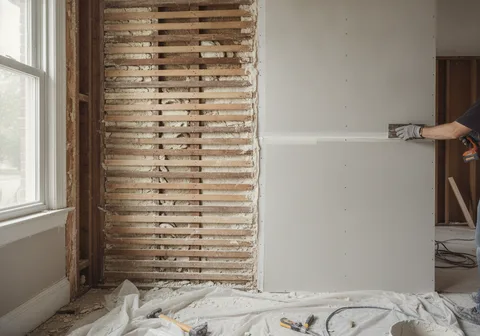
Lath & Plaster to Drywall
Overlaying or replacing failed plaster in the brick and stone houses of Galt and Preston, with the baseboards and casings saved and put back, and the later patches and textures tested before anything is cut.
Learn more →
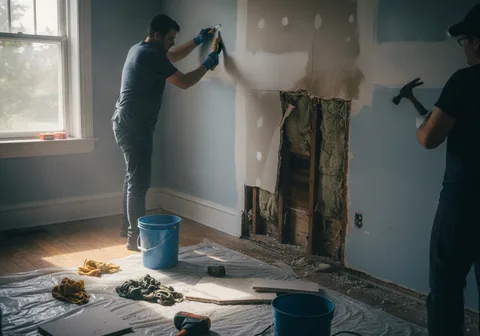
Water Damage Repair
Cutting out soaked board above the water line, drying and checking the cavity, and re-boarding after the river, the pipe or the roof has been dealt with — in the low streets by the Grand and Speed especially.
Learn more →
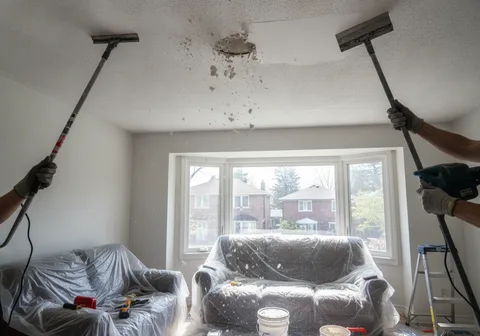
Ceiling Repair & Popcorn Removal
Taking stipple and popcorn ceilings smooth by scrape-and-skim or overlay, re-securing sagging plaster and drywall ceilings, and repairing stains and cracks — after a lab test on anything old enough to need one.
Learn more →
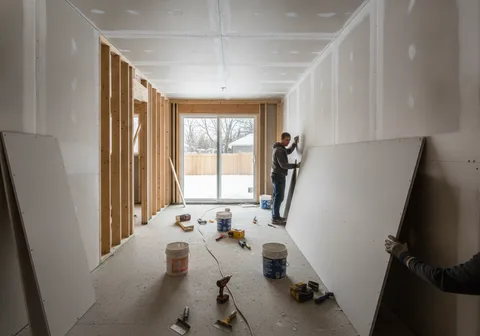
Basement & Addition Drywall
Boarding and finishing bare and tired basements, additions that meet old brick cleanly, and additional residential units built to the fire separation on the approved drawings — in the subdivisions and under the old towns alike.
Learn more →
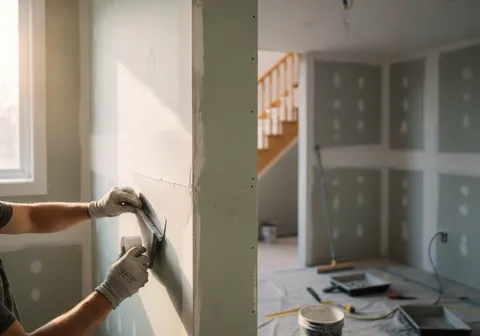
Taping, Mudding & Finishing
Taping and finishing to Level 4 for ordinary rooms and Level 5 where light rakes the surface, finishing board hung by others, and skimming old plaster and much-patched walls back to flat.
Learn more →
Drywall in Cambridge: Old Walls, Water, Permits and Disposal
When a Cambridge drywall job needs a building permit. The City's building permits page sets the general rule — a permit for any structure larger than 10 square metres (108 square feet) or that includes plumbing, approved before any work begins — and then lists the projects that need one. For drywall the relevant entries are interior structural alterations, adding or removing walls (the City's example is creating different room sizes or uses), plumbing or drains, finishing attic space, and the creation of additional residential units. Painting and decorating, cupboards without plumbing and like-for-like window replacement do not need one. The practical reading: re-boarding over or in place of existing plaster, patching, skimming a ceiling and replacing water-damaged board on walls that stay where they are is finish work; taking down or adding a partition, finishing an attic or creating a unit is a permit application first. Note that Cambridge's list says adding or removing walls without carving out non-structural ones, so a wall coming out in a Galt house goes to the building division as a question, not an assumption. Building Services is at building@cambridge.ca.
Plaster, asbestos and the test that comes first. Lime plaster on wood lath from before the 1930s is generally not an asbestos concern on its own, but the houses in Galt, Preston and Hespeler have been patched, skimmed and re-ceilinged for a century, and the later layers can be: joint compounds, patching plasters and sprayed or trowelled textures applied from roughly the 1950s to the late 1980s may contain asbestos, and vermiculite insulation found above an old ceiling is treated as containing it by default. Ontario's asbestos regulation (O. Reg. 278/05) governs how material that contains it is handled on a renovation, and the Region of Waterloo accepts asbestos waste only at the Waterloo site, on a weekly receiving day, with prior approval and the material sealed in double 3-mil or single 6-mil bags. So before a textured ceiling is scraped or an old plaster wall with later patches is cut into, a sample goes to a lab. A clean result and the work proceeds as drywall. A positive result and the removal belongs to a licensed abatement contractor, after which we board. The test is cheap; skipping it is not.
The rivers, and what water does to gypsum. Galt's lower streets along the Grand and the parts of Preston and Hespeler close to the Speed have flooded before, and even without a river event the basements in the older stock take on water through rubble and block foundations when the ground is saturated. Gypsum board that has been wet through does not recover: it loses strength, the paper face feeds mould, and drying it in place is not a repair. The wet section is cut out above the water line, insulation behind it is removed if it is wet, the cavity is dried and checked, and new board — moisture-resistant where it makes sense — goes in only after the source is dealt with. For a river flood that source is the river and the repair waits for the basement to be truly dry; for a burst pipe it is the plumber; for a seeping foundation it is drainage or waterproofing, which is another trade. Properties in a Grand River Conservation Authority regulated area may need GRCA permission for construction or development; ordinary interior repair is not development, but anyone planning a basement unit or a change to the building in those streets should check the GRCA's Map Your Property tool before drawing plans.
Heritage districts and the inside of the house. Cambridge has three Heritage Conservation Districts — Blair Village, Dickson Hill and the Main Street district covering the former Galt core — and many individually designated houses in Galt and Preston. The City's heritage page describes the districts and designation but does not say that interior work needs heritage approval, and in general heritage controls concern what is visible from the street. Drywall is interior. Where it can touch heritage is at the window: new board that changes the depth of a reveal, or a casing removed and not put back, alters a protected elevation from inside. On a designated house or inside a district the sensible step is a question to heritageinfo@cambridge.ca before the trim comes off, and our approach in any century home — keep the trim, scribe the board to it, put it back where it was — is the same whether or not the house is on the register.
Additional units in old houses: the drywall is the fire separation. Cambridge allows up to two additional residential units on a lot with a single, semi or townhouse, for three in total, and its ARU page is plain that they must be built with a building permit to the Ontario Building Code and that occupancy has to be approved by Building Services. The provincial second unit guide gives the Code basis: a 30-minute fire separation between units and common areas, reducible to 15 minutes if the whole house has interconnected smoke alarms, a basement unit ceiling of at least 1.95 m over the required floor area, and carbon monoxide alarms wherever there is a fuel-burning appliance or an attached garage. In a Galt or Preston house that often means a rated ceiling built below joists that were never square, with the board continuous into bulkheads and boxed around every duct — and a hard look at whether a stone-foundation basement can clear the ceiling height at all. The drawings decide the rating; the inspector sees the board before it is taped.
Where the old wall goes afterwards. Drywall from a Cambridge job goes to the Region's Cambridge waste site on Savage Drive or the Waterloo site on Erb Street West, and the Region's drop-off rules treat gypsum board as its own sorted stream for recycling: painted and wet drywall are accepted, screws, nails and corner bead can stay in. Plaster and lath are not drywall and do not go in that stream; nor do cement board, wood, plastic, insulation or tile, all of which are garbage. A mixed load is charged at the highest rate in it and every load carries a minimum fee, so a plaster tear-out keeps the lath, the plaster and any new gypsum offcuts apart. It is not a landfill ban, but sorting is how the Region wants it done and it is cheaper.
Permit requirements in Cambridge, including for adding or removing walls, plumbing and additional units, are on the City's building permits page; additional unit rules are on its ARU page and heritage districts on its heritage page. Second-unit requirements are summarised on ontario.ca and the Code itself is published through Ontario's Building Code. Asbestos handling follows O. Reg. 278/05; drywall and asbestos disposal rules are the Region of Waterloo's. Property in a regulated area may need permission from the Grand River Conservation Authority for construction. Confirm anything that affects your property with the City before work starts.
Frequently Asked Questions
Should I replace the plaster in my Galt house with drywall, or repair it?
If the plaster is sound and the problem is cracks, repair it — good lime plaster is a better wall than drywall. If the keys have let go and the wall bulges or sounds hollow across large areas, the choice is between overlaying new board over the plaster, which keeps the mess down and the trim mostly where it is, and stripping to the studs, which is messier but lets you insulate and rewire. The site visit is where we tell you which wall is which.
Does converting plaster to drywall need a permit in Cambridge?
Replacing or covering the finish on walls that stay where they are is finish work and is not on the City's permit list. Removing or adding a wall, finishing an attic, adding plumbing or creating a unit is. Cambridge lists adding or removing walls without an exemption for non-structural ones, so a partition coming out goes to the building division as a question first.
Is there asbestos in my old walls?
Original lime plaster usually not; the later patches, compounds and textured ceilings from about the 1950s to late 1980s possibly, and vermiculite above a ceiling is treated as containing it. A lab test of a sample settles it, and we do not scrape or cut into suspect material until the result is back.
My basement flooded — can you just dry the drywall and paint it?
No. Board that has been wet through has lost its strength and the paper is a mould risk. It is cut out above the water line, the cavity dried and checked, and new board installed after the source is dealt with. Drying it in place is not a repair.
How much does drywall cost in Cambridge?
In an old house, what is behind the wall is the price: plaster to strip or overlay, framing that is out of plane, trim to save, a lab test first. In a newer basement it is the bulkheads and drops. Planning ranges are on the drywall cost page; the real number follows a site visit.
Can you keep the original baseboards and casings?
Yes, and that is the point of doing it carefully. Trim is removed, labelled and stored, the new board is scribed to the openings, and the trim goes back. Where an overlay adds thickness, jamb extensions make up the difference so the casings sit right.
Do you paint?
No. The work ends at a sanded, primed finish to the agreed level — Level 4 for most rooms, Level 5 where raking light or dark paint demands it. Painting is a separate trade and we are clear about the hand-off.
Ready to Get Started?
Call 226-779-6098 or send the form for a written quote for drywall in Cambridge.